Rubber Bumpers for Warehouse

Rubber bumpers are an important part of warehouse safety and protection. During loading and unloading, forklifts, trucks, and other vehicles often operate in tight spaces, where minor collisions with walls, doors, columns, and corners are difficult to avoid. Rubber bumpers help absorb these impacts and reduce damage to both property and equipment.

A rubber bumper is a protective component made from rubber and installed in areas that are likely to be hit or scraped. Because rubber is elastic, it can absorb impact and reduce the force of collisions. This makes rubber bumpers a practical solution for improving safety in busy work areas.

Rubber bumpers are widely used in logistics warehouses, distribution centers, factories, and loading docks. They are commonly installed on walls, columns, corners, and areas near forklift routes or dock doors. These products are especially useful in places with frequent vehicle movement.

There are several types of rubber bumpers, each suited to different needs. Rectangular or square bumpers are often used on wide wall surfaces or parking areas. D-shaped bumpers are popular because they absorb impact well and are easy to install, making them suitable for walls and loading zones. Cylindrical bumpers are useful in areas with movement from different directions, while corner guards protect corners and columns from repeated contact.

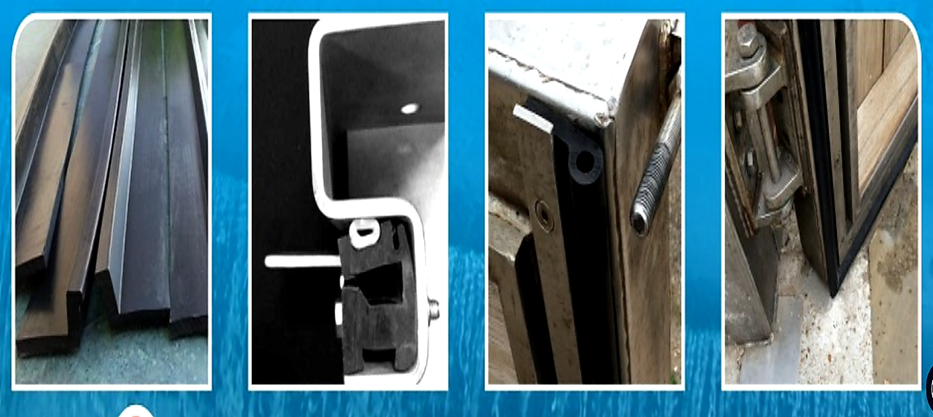
Rubber strips or flat bumpers are also used as additional wall protection. They are ideal for areas exposed to frequent rubbing or light impacts over time.

Proper installation is essential for good performance. The mounting surface should be clean, level, and strong enough to hold the bumper securely. Bumpers should be placed in high-risk areas such as forklift paths and loading zones. They are usually fixed with bolts and anchors so they stay firmly in place during daily operations.

With the right type and proper installation, rubber bumpers can improve workplace safety, protect warehouse infrastructure, and reduce repair costs. Choosing the correct product is an important step toward creating a safer and more efficient warehouse.

PT Samudera Luas Paramacitra produces high-quality rubber bumpers in various types to fulfil your requirements. For more information or to place an order, please visit our website at www.niri-rubber.com or contact our customer care at (+62) 823 2018 9998 or email: admin@niri-rubber.com.

Rubber Bumper for Dock

Port operations reach one of their most critical moments when a vessel docks. During this phase, a vessel generates impact forces when it comes into contact with the dock. Without proper protection, this impact can damage both the dock structure and the vessel’s hull. This is why rubber bumpers play an important role.

Rubber bumpers are protective devices made of rubber and installed along the dock face to absorb impacts between vessels and port structures. Compared to heavy-duty fender systems, rubber bumpers provide lighter, supplementary protection.

Rubber bumpers are generally used in ports that require light to medium impact protection. Suitable locations include docks for small to medium vessels, jetties, fishing ports, and terminals with lower docking frequency. They are also often installed in additional areas of large ports, such as secondary sides or dock corners, as a complement to the main fender system.

Rubber bumpers are available in various shapes and sizes depending on operational requirements. The most commonly used type is the D-shape bumper, which is easy to install and suitable for small to medium docks. For areas that need wider protection, rectangular or square bumpers are used. Cylindrical bumpers offer greater flexibility and can accommodate vessel movement. At dock corners that are prone to impact, corner bumpers are installed to provide special protection.

Proper installation of rubber bumpers is critical to ensure optimal performance. The dock surface must be properly prepared before installation. Bumpers should be installed at areas that frequently come into contact with vessels, including along the berthing line and corner areas. They are installed using bolts and corrosion-resistant anchors to withstand harsh marine environments.

With proper installation, rubber bumpers can improve operational safety and extend the lifespan of both the dock structure and vessels. Therefore, choosing the right type and installation method is an important investment to support safe and efficient port operations.

For more information about rubber bumpers, visit www.niri-rubber.com or contact customer care at (+62) 823 2018 9998 or email: admin@niri-rubber.com.

Smart Ways to Select Elastomeric Bearing Pads

In modern construction projects—especially in the building of bridges and various reinforced concrete structures—there is an important component that is often unseen but plays a very crucial role: the elastomeric bearing pad.

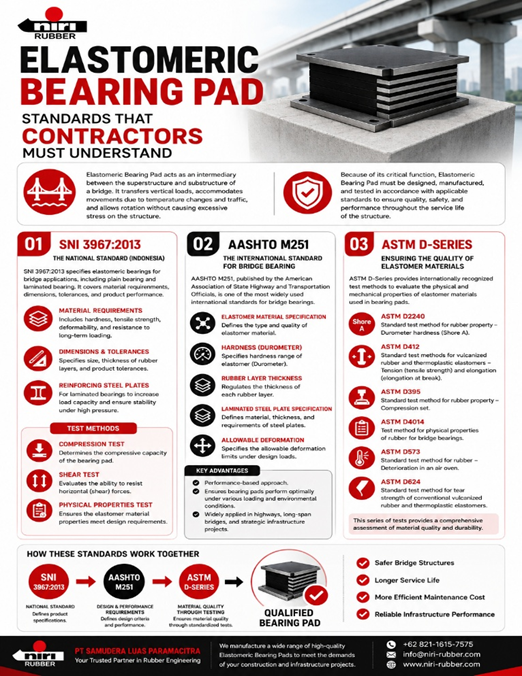
An elastomeric bearing pad acts as a flexible support placed between two structural elements, typically between bridge girders and their supporting structures. Its main function is to transfer loads from the upper structure to the substructure while allowing controlled movement within the structure.

Elastomeric bearing pads are usually made from natural rubber or synthetic rubber. In many cases, the elastomer is reinforced with thin steel plates arranged in layers. This reinforcement improves the bearing pad’s compressive strength and helps maintain its shape under heavy loads.

Because elastomer is naturally flexible, the bearing pad can deform under load and return to its original shape when the load is reduced. This flexibility enables the structure to safely accommodate horizontal movements, small rotations, and thermal expansion caused by temperature changes.

Types of Elastomeric Bearing Pads

Different types of elastomeric bearing pads are used depending on the structural design and load requirements.

  • Plain Elastomeric Bearing Pad. Plain elastomeric bearing pads are the most basic type. They do not contain internal steel reinforcement and are typically used in structures with lighter loads or simpler movement requirements.
  • Laminated Elastomeric Bearing Pad. Laminated bearing pads consist of several layers of elastomer bonded with thin steel plates inside. These steel plates increase compressive strength and help control deformation. Because of their strength and stability, laminated elastomeric bearing pads are widely used in bridge construction, flyovers, and large concrete structures.
  • Specialized Elastomer Bearing Systems. In some projects, elastomer is used as part of more advanced bearing systems such as pot bearings or seismic bearings. These systems are designed to handle higher loads and larger structural movements, including those caused by seismic activity.

Key Factors in Selecting Elastomeric Bearing Pads

Selecting the right elastomeric bearing pad is an important step in ensuring the long-term performance of a structure. Since every project has different requirements, several factors should be considered.

  • Load Capacity. The bearing pad must be able to support the expected structural loads. These include dead loads, live loads such as vehicles, and other operational loads that the structure may experience during its service life.
  • Dimensions and Thickness. The size of the bearing pad should match the structural support area. The thickness of the elastomer layers also plays an important role in determining how much movement or rotation the pad can accommodate.
  • Elastomer Material Quality. High-quality elastomer materials ensure durability and reliable performance over time. Important characteristics include: shore hardness, resistance to ozone and weather exposure, and long-term material stability.
  • Compliance with Technical Standards. Elastomeric bearing pads should comply with recognized industry standards such as ASTM or the Indonesian National Standard (SNI). These standards ensure the product has been properly tested and meets engineering requirements.
  • Environmental Conditions. The project environment can also affect bearing pad performance. For example, coastal structures require materials resistant to corrosion and salt exposure. Meanwhile projects in extreme climates require elastomers that remain stable under significant temperature variations.

PT Samudera Luas Paramacitra manufactures a wide range of customizable high-quality elastomeric bearing pads designed for various construction and infrastructure applications. If you are looking for reliable elastomeric bearing pads or would like to discuss the best solution for your project, feel free to contact us at +62-821-1615-7575 or  info@niri-rubber.com.

Our team will be happy to help you find the right elastomeric bearing pad for your specific project requirements.

Cone Stuffing Pack: Reliable Sealing for Leak-Free Operations

In oil & gas operations, every component has an important role in controlling fluids and pressure. Even a small leak can reduce production efficiency and create safety risks. That’s why the Cone Stuffing Pack is essential. Although it works behind the scenes, it plays a key role in keeping the system reliable.

The Cone Stuffing Pack is a cone-shaped seal placed inside the stuffing box, mainly used for polished rod applications. Its design helps create a reliable seal during operation. As the rod moves up and down, the cone packing keeps steady contact, preventing fluid from leaking out of the system.

The Cone Stuffing Pack acts as a main seal that prevents oil, gas, or other fluids from leaking out of the stuffing box. It helps keep the system pressure stable and reduces the risk of leaks that can cause losses or safety issues. The elastomer material also lowers friction against the rod, reducing wear and helping the equipment last longer.

The Cone Stuffing Pack operates based on the principle of elastomeric compression. During installation, multiple cone rings are arranged within the stuffing box and compressed through an adjustment mechanism. This compression forces the sealing material to expand radially, tightly closing the gap between the rod and the stuffing box wall. The flexibility of the material allows the seal to remain effective despite movement, vibration, and pressure fluctuations, resulting in consistent and dependable dynamic sealing.

One of the key advantages of the Cone Stuffing Pack lies in its ability to adapt to demanding operating environments. Manufactured from high-performance synthetic rubber materials such as NBR (Nitrile Butadiene Rubber) and HNBR (Hydrogenated NBR), this component can withstand a wide range of conditions—from high-temperature wells and abrasive fluids to corrosive gas exposure.

In practice, the Cone Stuffing Pack is commonly used in stuffing boxes for oil and gas wells and other dynamic sealing applications. It helps protect equipment, reduce downtime due to leaks, and improve operational safety.

Don’t let minor leaks turn into major problems. Contact PT Samudera Luas Paramacitra for orders or technical consultation via hotline (+62) 823 2018 9998 or email admin@niri-rubber.com.
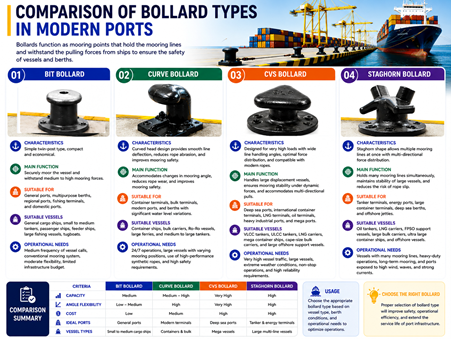
Durable Bollards for Extreme Rainy Seasons

Extreme rainy seasons pose major challenges for port and jetty areas. Heavy rainfall, strong winds, and increased sea currents can affect the stability of moored vessels. Under such conditions, ship mooring systems are required to work harder, and bollards become one of the most critical components in ensuring the safety of both vessels and jetty infrastructure.

Choosing the right bollard is not only about meeting technical specifications, but also about considering real operational condition during extreme weather. When rainfall is intense, the loads acting on mooring lines and bollards increase significantly. Stronger currents, winds, and unstable vessel movements can generate repeated and even sudden tensile forces. An effective bollard must be designed to withstand these conditions in order to prevent mooring failure.

How do we select and install the right bollard to face extreme conditions?

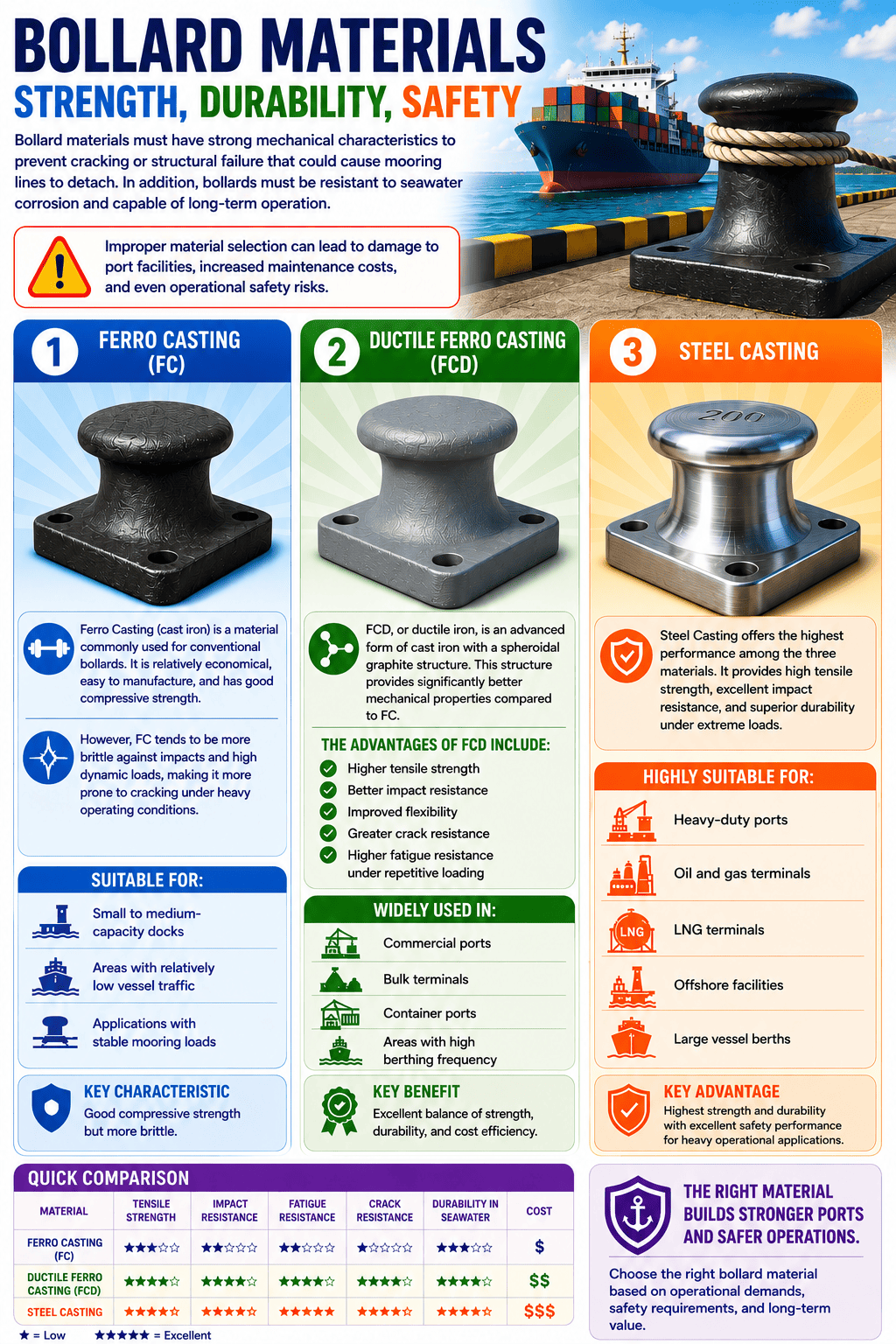
Strong Materials. An ideal bollard must be made from strong materials that can withstand harsh marine environments. Continuous exposure to rain and salt-laden air can reduce metal strength. Therefore, materials such as cast steel or ductile cast iron are excellent choices due to their high mechanical strength, resistance to cracking, and ability to withstand large and repeated tensile loads. These materials are also more resistant to pressure, impact, and load fluctuations, ensuring long-term reliability and performance.

Bollard Corrosion Resistance. Corrosion resistance is a key factor in determining the safety and service life of a bollard, especially in jetty areas where standing water during the rainy season can accelerate rust formation if protection is inadequate. For this reason, appropriate anti-corrosion systems are essential, such as hot-dip galvanizing, zinc-based anti-rust coatings, strong base (primer) coatings, and weather-resistant topcoats. Proper protection helps maintain bollard strength, extend service life, and reduce maintenance and replacement costs.

Optimal Load Capacity. During extreme rainy seasons, vessels are more exposed to additional forces from wind and currents, resulting in higher loads being transferred to the bollard. The right bollard is one that is designed with a load capacity suitable for the type and size of vessels served, and capable of withstanding repeated dynamic loads. Adequate capacity provides a greater safety margin and reduces the risk of deformation or structural failure.

Strong Foundation Design. Foundation design and installation methods play a vital role in ensuring that bollards can safely withstand loads, especially during extreme rainy seasons when soil and jetty concrete conditions may be affected by water saturation. Bollards should have sufficiently wide bases, anchor bolt systems with appropriate quantity and embedment depth, and be securely integrated with the main jetty structure. This design allows tensile loads from mooring lines to be evenly distributed into the supporting concrete, preventing load concentration at a single point.

PT Samudera Luas Paramacitra manufactures a wide range of high-quality, all-weather-resistant bollards. For orders and product consultations, please contact +62 823-2018-9998.

Rubber Fenders in Emergency Supply Chains

In natural disaster situations such as earthquakes, tsunamis, major floods, and extreme weather events, the smooth flow of emergency logistics is a critical factor in the success of crisis response. Humanitarian aid must be delivered quickly, safely, and sustainably to ensure timely access to affected areas.

As an archipelagic and maritime nation, Indonesia relies heavily on ports as key nodes in national logistics distribution, including during emergency conditions. Ports function not only as entry points for humanitarian assistance but also as consolidation and distribution hubs for disaster-affected regions.

Operational Challenges at Ports During Disasters

Ports operating under emergency conditions face significantly greater operational pressures compared to normal situations, including:

  • A sudden surge in humanitarian aid vessel traffic within a short period
  • Limited vessel maneuverability due to damaged port facilities or adverse water conditions
  • High impact loads during berthing operations
  • Extreme time pressure in the loading and unloading of humanitarian logistics

Without adequate infrastructure protection systems, the risk of damage to both quay structures and vessels increases substantially. Such conditions may lead to port shutdowns and disruption of the emergency supply chain.

One port infrastructure component that is often overlooked yet plays a crucial role is the quay rubber fender system. Rubber fenders are protective systems designed to absorb berthing impact energy, thereby safeguarding both quay structures and vessel hulls.

In emergency situations, the role of rubber fenders becomes even more vital, as humanitarian vessels often need to berth rapidly, under weather conditions that may be unfavorable, and with limited maneuvering precision.

Contribution of Rubber Fenders to Emergency Supply Chain Continuity

In emergency supply chains, every minute is extremely valuable. Properly functioning rubber fender systems have a direct impact on logistics efficiency, including:

  • Accelerating the berthing process of humanitarian vessels by minimizing collision risks
  • Reducing quay downtime caused by structural damage
  • Enhancing safety during loading and unloading operations, particularly for humanitarian cargo

With adequate protection in place, quays can continue operating continuously even under extreme operational stress.

To perform effectively under extreme conditions, port rubber fenders must meet the following technical requirements:

  • High Energy Absorption
    The ability to absorb large impact energies is essential to accommodate humanitarian vessels of varying sizes and cargo loads.
  • Controlled Reaction Force
    Excessive reaction force can damage quay structures. A well-designed fender system balances energy absorption with controlled reaction forces.
  • Material Durability
    Rubber fenders must withstand intensive use, prolonged exposure to seawater, extreme weather variations, and repeated loading over extended periods.
  • Stable Performance in Extreme Conditions
    Fenders must maintain reliable performance under high waves, strong currents, and limited vessel maneuverability.

Selecting the appropriate rubber fender specifications is therefore critical to maintaining quay reliability during disaster situations.

Supporting Safe Berthing and Aid Distribution

Humanitarian aid vessels typically carry heavy cargo and are required to operate at high speed. Rubber fenders serve as the first line of protection, enabling vessels to berth safely even when port conditions are less than ideal.

With a reliable fender system in place, loading and unloading operations can be conducted more quickly, more safely, and with a lower risk of damage. This directly accelerates aid distribution to affected areas and enhances the overall effectiveness of disaster response efforts.

PT Samudera Luas Paramacitra has been manufacturing a wide range of high-quality fender systems for more than two decades. For orders or technical consultations regarding fender products, please contact our Hotline: (+62) 823 2018 9998.

Selecting and Maintaining Rice Hulling Rollers

The Minister of Agriculture of the Republic of Indonesia has set a target to achieve rice self-sufficiency by 2026. To realize this goal, the rice milling industry plays a crucial role in converting paddy into high-quality rice. One of the key factors determining the success of this process is the proper use of rice hulling rollers.

Rice hulling rollers are the main components of husker machines, functioning to remove the husk (hull) from paddy and produce rice. Optimal performance of rice hulling rollers results in a high husk removal rate, better rice yield, minimal broken grains, and a stable and efficient milling process.

Rice hulling rollers operate based on the principle of friction and differences in rotational speed between two opposing rollers. Paddy passing between the rollers while experiencing controlled pressure and friction, allowing the husk to be removed effectively without damaging the rice kernel. For optimal hulling performance, rice hulling rollers must have appropriate hardness, proper elasticity, and a surface capable of gripping paddy grains consistently.

To ensure maximum machine performance, selecting the right rice hulling roller should be done carefully by considering the following aspects:

  • Material Quality. High-quality rice hulling rollers are made from specialized rubber compounds with a balanced formulation of hardness and elasticity. The right material effectively removes the husk without increasing the level of broken rice.
  • Compatibility with Machine Capacity. Each rice milling machine has a different processing capacity. Therefore, rice hulling rollers must be matched to the machine capacity to ensure optimal performance and prevent premature wear.
  • Dimensional Precision and Balance. Rollers with precise diameter and proper balance provide uniform hulling pressure, reduce machine vibration, and maintain consistent milling results.
  • Service Life and Operational Efficiency. Rice hulling rollers with longer service life help reduce maintenance costs, minimize machine downtime, and improve long-term operational efficiency.
  • Manufacturer Support and Proven Quality. Choosing rice hulling rollers from experienced manufacturers with clear quality standards ensures reliable performance and better technical support.

In addition to proper selection, maintenance of rice hulling rollers significantly affects machine performance and milling quality. Recommended maintenance practices include adjusting the roller gap according to machine specifications, maintaining ideal paddy moisture content before milling, conducting regular wear inspections, replacing rollers before excessive wear occurs, and avoiding machine operation beyond its designed capacity.

As part of its support for the national rice milling industry, PT Samudera Luas Paramacitra (SLP) manufactures high-quality rice hulling rollers in various brands, milling capacities up to 140 tonnes of dry rice grain, and roller sizes tailored to machine requirements.

With over 40 years of experience and ISO 9001 certification, PT Samudera Luas Paramacitra implements strict quality control from raw materials to finished products. Each roller undergoes a series of tests, including rheometer testing to control and ensure rubber compound quality, as well as visual and dimensional inspections to verify roller balance and hardness.

By using high-quality rice hulling rollers from PT Samudera Luas Paramacitra, rice milling plants can make a tangible contribution to achieving sustainable national rice self-sufficiency.

📞 Product Orders and Consultation: +62 823-2018-9998

Choosing the Right Rubber Airbags

Safety and efficiency are the foundations of shipyard industrial operations. Every process, from hauling a vessel ashore to launching it back into the water, involves significant risks. Operational efficiency is also essential to maintain the industry’s growth.
This is why rubber airbags play such an important role. This equipment is crucial in shipyard operations for the following reasons:

  • Efficient Ship Launching. Airbags provide high lifting capacity and even load distribution, enabling faster ship launching with less manpower and reduced risk of damage.
  • Improved Workplace Safety. Proper material quality and design help minimize potential accidents. High-quality airbags maintain vessel stability during docking and launching process.
  • Flexible Use. Unlike steel rails, rubber airbags can be reused for vessels of various sizes and shapes. This flexibility makes them highly economical for both small and large shipyards.
  • Minimal Upfront Investment. Rubber airbags do not require plenty of shipyard construction prior to their use, unlike graving docks or dry docks. Airbags can operate in a flat, clean surface. Therefore, significantly reducing upfront investment to the shipyard owners.

However, the effectiveness and efficiency of airbags greatly depend on their quality and specifications. Therefore, choosing the right rubber airbag is crucial for shipyard companies. Below are several key factors that must be considered:

1. Check the Quality of the Rubber Material

The main components of an airbag are its rubber layers and reinforcing fabric (synthetic tire cord). Low-quality material will easily crack, peel, or lose elasticity. Ensure that the airbag has an outer rubber layer that is resistant to abrasion and marine weather, an inner layer with high air-tightness, and multiple reinforcement layers (typically 3–7 plies).

2. Choose the Right Layer Structure Based on Load

The larger the vessel, the higher the internal pressure and shear force that the airbag must endure. Therefore, the ply structure must be carefully matched to the expected working load. The recommended ply configuration is as follows:

  • 3–4 plies — suitable for small vessels such as tugboats and speedboats.
  • 5–6 plies — ideal for medium-sized cargo vessels and barges.
  • 7 plies or more — required for large vessels and heavy-duty hauling operations.

3. Ensure Certification and Quality Standards

Airbags should comply with international standards such as ISO 14409 (Ship Launching Airbags) and other shipbuilding manufacturing standards. Certified products are also accompanied by pressure tests, rubber physical properties tests, and leakage tests. Certification ensures that the airbags are safe for heavy-duty operations.

4. Choose the Appropriate Size and Diameter

Common airbag sizes range from 0.8 m to 2.0 m in diameter, with effective lengths of 5 m to 20 m. Size selection depends on vessel width, tonnage, and launching/docking method. Shipyards must calculate the required number of airbags and their spacing to ensure even load distribution, such procedure is standardized under ISO 17682 (Methodology for ship launching utilizing air bags).

5. Check Safety Features and Supporting Accessories

High-quality airbags come equipped with leak-proof air valves, valve protection caps, reinforced end fittings (end metal parts), and safety ropes when needed. Avoid using airbags without standard accessories as they may increase operational risk.

PT Samudera Luas Paramacitra has extensive experience in supplying marine equipment, including high-quality rubber airbags. If you need more detailed information about rubber airbags, please contact our hotline at (+62) 823 2018 9998 or email admin@niri-rubber.com.

Choosing the Right Pipe Expansion Joint

Imagine a piping system that runs continuously – delivering hot water, steam, or high-pressure fluids from one point to another. At the start of installation, everything seems perfect: tight connections, stable pressure, smooth flow. However, over time, temperatures rise, pressure increases, and the pipes begin to expand. Without room to move, the pipe joints start to strain. Tiny vibrations from pumps and machines occur every second, adding invisible stress. Eventually, small cracks appear, leaks develop, and the entire system is forced to shut down.

The losses can be tremendous—not only the repair costs but also production downtime, equipment damage, and even safety risks. Problems like these often occur not because of poor pipe quality, but due to the absence of a proper expansion joint.

Why Are Expansion Joints So Important?

In a piping system, an expansion joint acts as a “stress absorber.” This component is designed to accommodate expansion, contraction, vibration, and movement caused by changes in temperature and pressure. Without an expansion joint, the pipes have no room to move. Every temperature change causes metal expansion, and every machine vibration is transmitted directly to the joints. Over time, this leads to cracks, leaks, or even total structural failure.

Using the right expansion joint keeps connections secure, reduces vibration, and extends the lifespan of the piping system. For this reason, this small component is often called the invisible protector of industrial reliability.

How to Choose the Right Pipe Expansion Joint

Every piping system has its own characteristics and requirements. To determine the ideal expansion joint, several important factors must be considered.

First, understand the function and operating environment of your piping system.
Is the pipe used for water, steam, gas, or chemicals? Is it located outdoors in hot conditions, in a high-pressure room, or in a humid and corrosive environment?

For water systems orang medium-pressure piping, rubber expansion joints are the best choice. Made from elastomer materials such as EPDM or neoprene, this type effectively absorbs vibration, reduces noise, and resists mild corrosion.

If the system operates under high pressure or extreme temperatures, then metal expansion joints are the answer. Made of stainless steel with a corrugated structure, this type is designed to handle extreme conditions while remaining stable under pressure.

Meanwhile, for hot air or exhaust gas systems, fabric expansion joints are commonly used. Lightweight, flexible, and heat-resistant, they are ideal for ventilation and industrial air duct applications.

Next, consider technical factors and operating conditions. The expansion joint must be compatible with the type of pipe movement—axial, lateral, or angular. If the system experiences frequent vibrations from pumps or machines, choose a type that can efficiently absorb vibration.

Pay attention to the environment where the piping system operates. In coastal areas, use corrosion-resistant materials. In high-temperature zones, make sure the material has good heat resistance. Every detail affects the system’s service life and stability.

Finally, ensure the product you select is certified under international standards such as EJMA (Expansion Joint Manufacturers Association), ASME (American Society of Mechanical Engineers), or ISO (International Organization for Standardization). These standards guarantee that each expansion joint has been tested for strength, durability, and operational safety.

PT Samudera Luas Paramacitra (SLP) provides various types of pipe expansion joints that meet international standards and are designed for diverse industrial applications. With the support of an experienced technical team, we are ready to help you determine the best solution to keep your piping system reliable and long-lasting. Contact us at Hotline (+62) 823 2018 9998 or Email: admin@niri-rubber.com.

Choosing the Right Concrete Expansion Joint

In every construction project, there is an important component that is often overlooked but plays a major role in maintaining structural reliability — the concrete expansion joint. This component functions to absorb movement, vibration, and temperature changes in concrete structures, thereby preventing cracks or serious damage in the future.

However, not all concrete expansion joints have the same specifications and quality. Choosing the right one greatly affects the safety, efficiency, and lifespan of the structure. The following is a guide to selecting the most suitable expansion joint for your project.


1. Understand the Function and Project Requirements

The first step is to understand the purpose and location of the expansion joint installation.
For high-rise buildings, expansion joints serve to accommodate movement due to temperature changes or minor vibrations from building activities. Meanwhile, for bridges, highways, and open concrete areas, these components help keep the surface level during expansion and contraction caused by temperature variations or traffic loads.


2. Choose the Right Material Type

There are several material types that determine the performance and durability of expansion joints in concrete applications:

  • Rubber Expansion Joint – Made from elastomeric materials, this type is highly flexible, water- and chemical-resistant, and ideal for areas with high movement such as highways, parking areas, or industrial floors.
  • Bituminous Fiber Board – Made from fiber mixed with asphalt, this type withstands extreme weather and is popular for roads, sidewalks, and outdoor areas.
  • PVC / Plastic Expansion Joint – Lightweight, corrosion-resistant, and easy to install. Commonly used in commercial and residential construction projects.
  • Foam Joint (Polyethylene or Polyurethane) – Flexible and adaptable in shape, ideal for concrete areas requiring significant expansion but not bearing heavy loads.

3. Consider the Operational Environment

The environmental conditions where the expansion joint is installed significantly affect its durability.
If the project is located in coastal or humid areas, choose materials with anti-corrosion protective coatings. For regions with high temperatures or direct sunlight exposure, use joints with high heat resistance and flexibility. Meanwhile, in earthquake-prone zones, select types capable of withstanding both horizontal and vertical movements without losing elasticity.


4. Ensure Product Quality and Standards

A good concrete expansion joint must comply with international standards such as ASTM (American Society for Testing and Materials) or ISO (International Organization for Standardization). Certified products ensure long-term performance, safety, and durability. Avoid products without clear technical specifications — a single mistake in a joint can cause major damage throughout the entire concrete structure.


Selecting the right concrete expansion joint is a long-term investment to maintain the strength and durability of your structure.
If you need high-quality concrete expansion joints, please contact PT Samudera Luas Paramacitra (SLP). Our technical team is ready to provide recommendations according to your project needs.

📞 Hotline: (+62) 823 2018 9998